
Heavy periods, finally lighter
I’d been told for years to just “monitor” my fibroids. Within a few cycles of Ruhi’s plan, my bleeding became noticeably more manageable.

Ruhi Rajput, widely regarded as the best dietitian in Gurgaon for hormonal health, has helped women reduce fibroid-related symptoms like heavy bleeding, bloating, and pelvic discomfort through targeted dietary changes — not through restriction, but through nutrition that directly supports estrogen balance. As a dedicated uterine fibroid diet consultant, she builds plans around what’s actually fueling your fibroid growth and symptoms.

Fibroids are extremely common, and yet most women are simply told to “monitor them” without any real guidance on what they can actually do day to day. Nutrition is one of the few levers genuinely within your control.
Fibroids are estrogen-sensitive growths — they tend to grow in response to estrogen, and excess or poorly metabolised estrogen in the body can fuel their growth and worsen symptoms like heavy bleeding and pelvic pressure. This estrogen load isn’t just about hormone levels on paper; it’s affected by inflammation, liver function, gut health, and diet quality.
This is why a proper fibroid diet plan needs to go beyond “eat more fibre” — it needs to actively support your body’s ability to process and clear excess estrogen, while reducing the inflammation that tends to make symptoms worse.
Often the most disruptive symptom, and closely tied to estrogen levels that diet can help influence.
Caused by fibroid size and location, something many women live with for years before addressing it.
From fibroid pressure on the bladder — a symptom that’s often dismissed or misattributed.
Frequently connected to both fibroid pressure and broader inflammation.
One of the most under-addressed fibroid symptoms, often treated as separate from the fibroids themselves.
Referred pain that tends to track alongside bleeding severity.
If heavy bleeding has left you feeling constantly drained, nutrition support for iron and energy levels is just as important as managing the fibroids themselves.
Every plan starts with understanding your fibroid size/location if known, symptom severity, bleeding patterns, current treatment, and any related iron deficiency or anemia. No generic hormone-balance checklist — just a real look at what’s fueling your specific symptoms.
Women with a confirmed fibroid diagnosis looking for dietary support alongside medical monitoring or treatment
Women experiencing heavy or prolonged periods who haven’t yet connected this to fibroids
Anyone dealing with fatigue or iron deficiency linked to heavy menstrual bleeding
Women in a “watchful waiting” phase with their gynecologist who want to be proactive through nutrition
Women managing fibroids alongside endometriosis or broader hormonal imbalance
Women preparing for or recovering from fibroid-related surgery who want nutritional support through the process
Broccoli, cauliflower, and cabbage support the liver’s ability to metabolise and clear excess estrogen.
Whole grains, legumes, and vegetables help the body excrete excess estrogen rather than reabsorbing it.
Leafy greens, legumes, and (where relevant) lean meats to help offset iron loss from heavy bleeding.
Turmeric, ginger, and omega-3 rich foods like flaxseeds and walnuts help reduce inflammation.
Some women find this helps reduce inflammation and estrogen load, though response varies.
Alcohol can interfere with the liver’s ability to clear excess estrogen efficiently.
This isn’t about eliminating entire food groups overnight — it’s about consistently shifting what’s on your plate to support your body’s own estrogen-clearing processes.
Understanding your fibroid size/location, symptom severity, bleeding patterns, and current treatment.
Built around supporting healthy estrogen metabolism and reducing inflammation, using real Indian meals.
Regular follow-ups to track how your symptoms, energy, and bleeding patterns are responding.
Your plan evolves alongside your treatment and how your symptoms change over time.
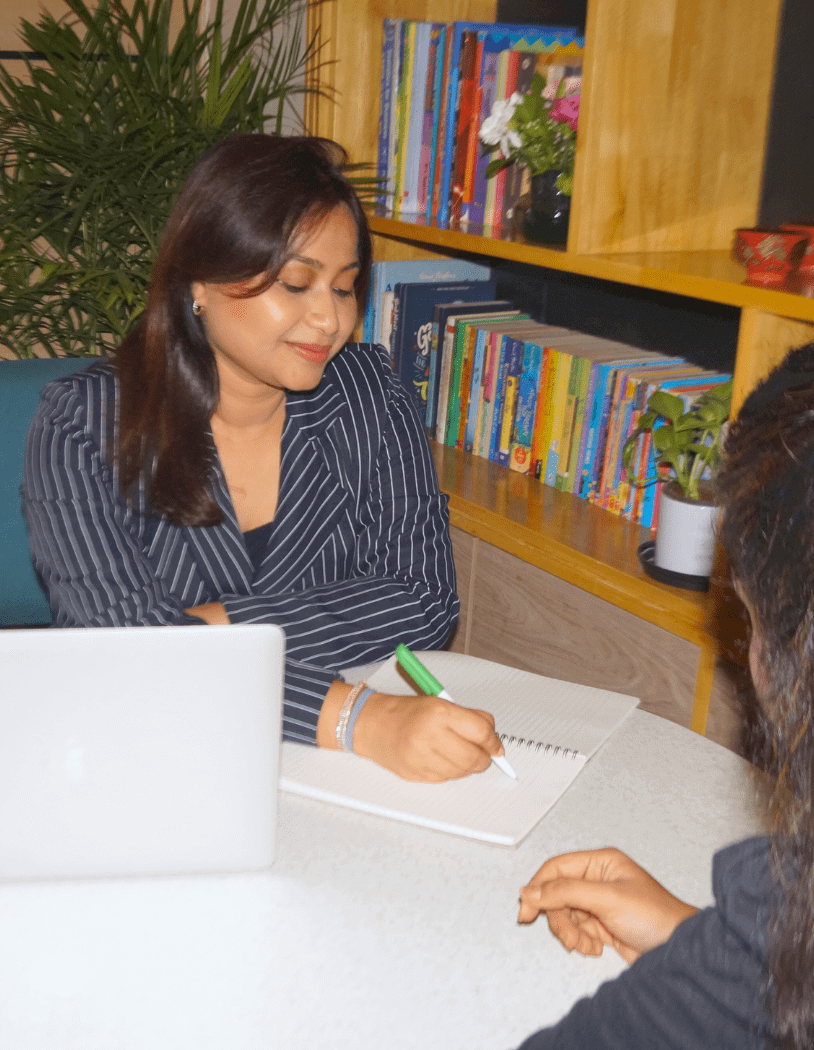

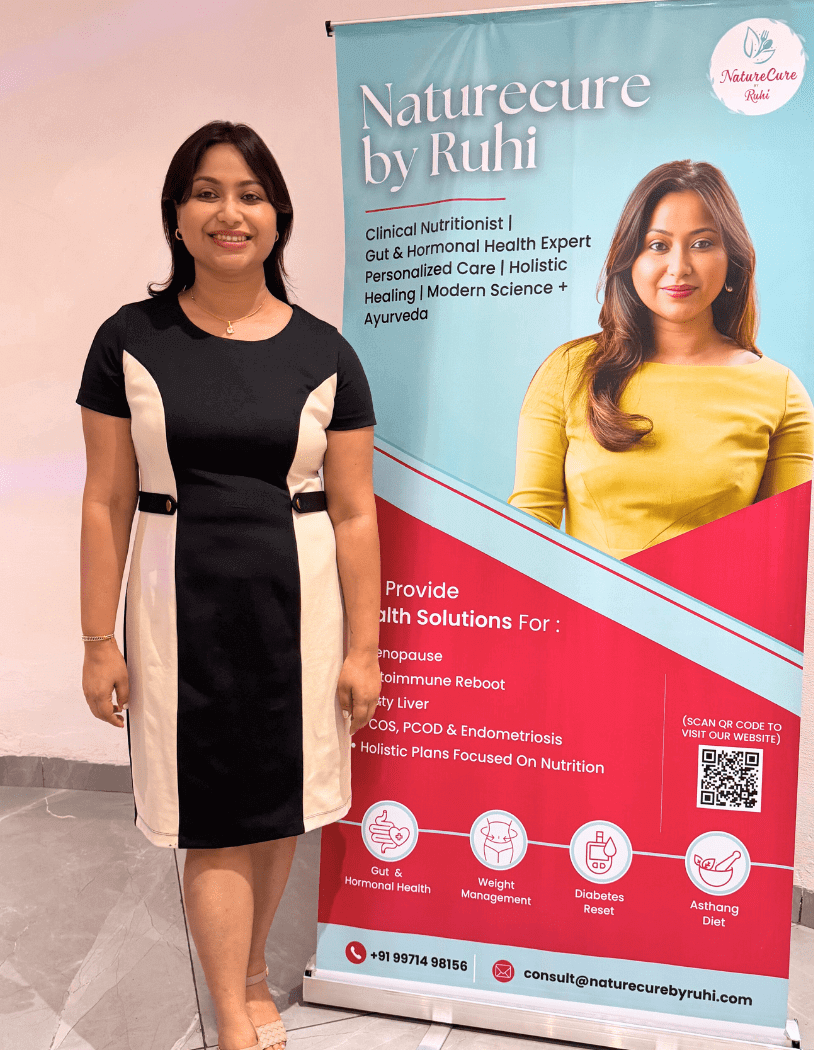

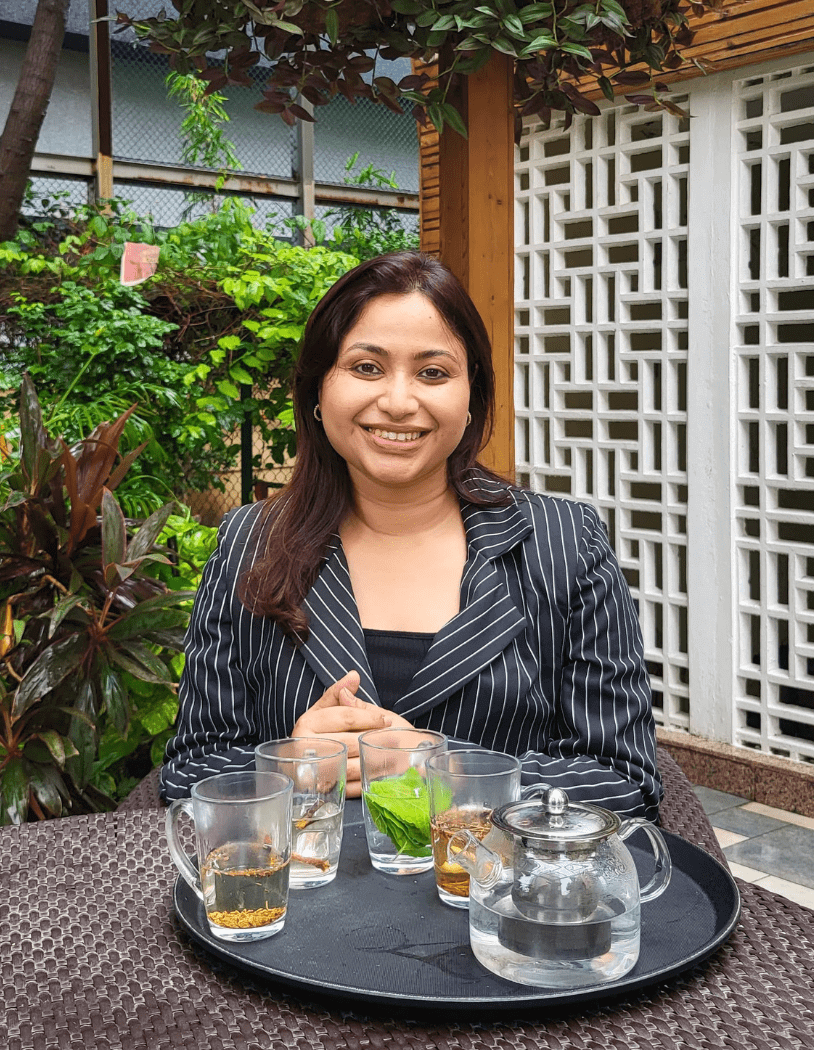

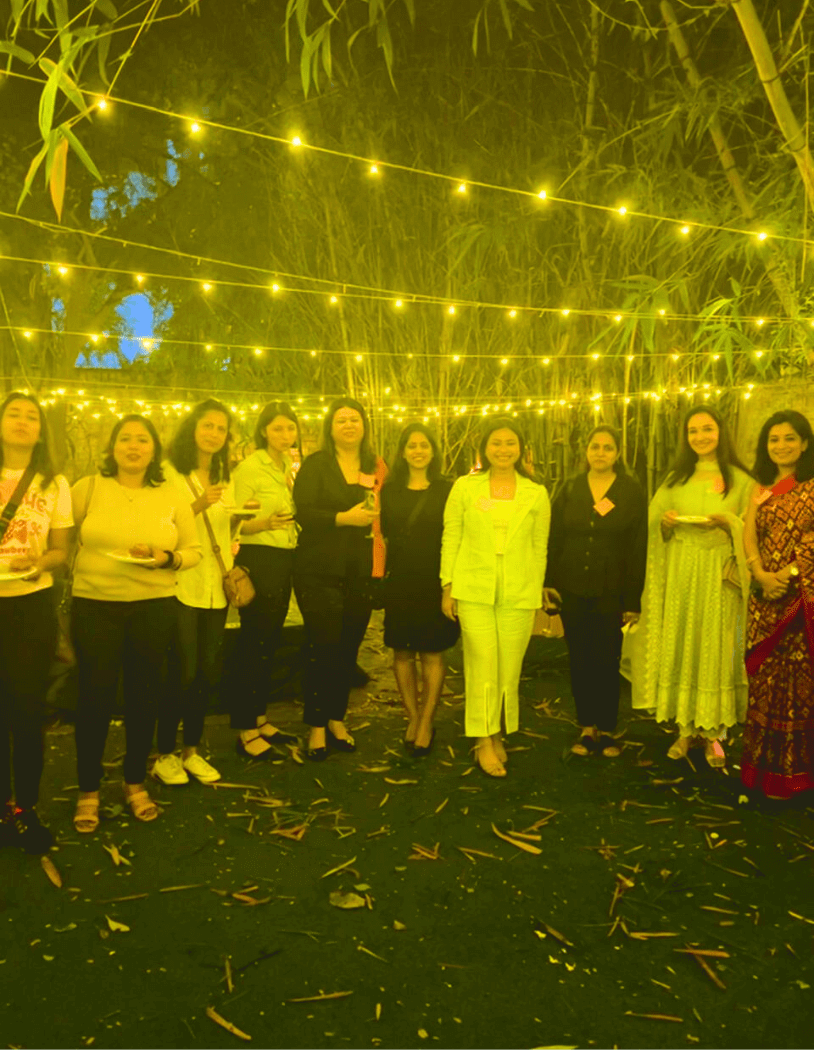
Beyond one-on-one consultations, Ruhi runs sessions where sustainable eating and hormonal health happen in real conversation — because managing fibroid symptoms isn’t just prescribed, it’s practiced.
Most fibroid diet consultants in Gurgaon offer a generic hormone-balance checklist. As a fibroid-focused dietitian working from both clinical and Ayurvedic principles, Ruhi’s approach specifically targets estrogen metabolism and inflammation together — the two forces most directly linked to fibroid growth and symptom severity. This program is also designed to work alongside your gynecologist’s monitoring or treatment, whether that’s medication, watchful waiting, or post-surgical care — never as a replacement for medical follow-up. Many women managing fibroids are also dealing with endometriosis or broader hormonal imbalance, and this nutritional approach is built to support all of these together.
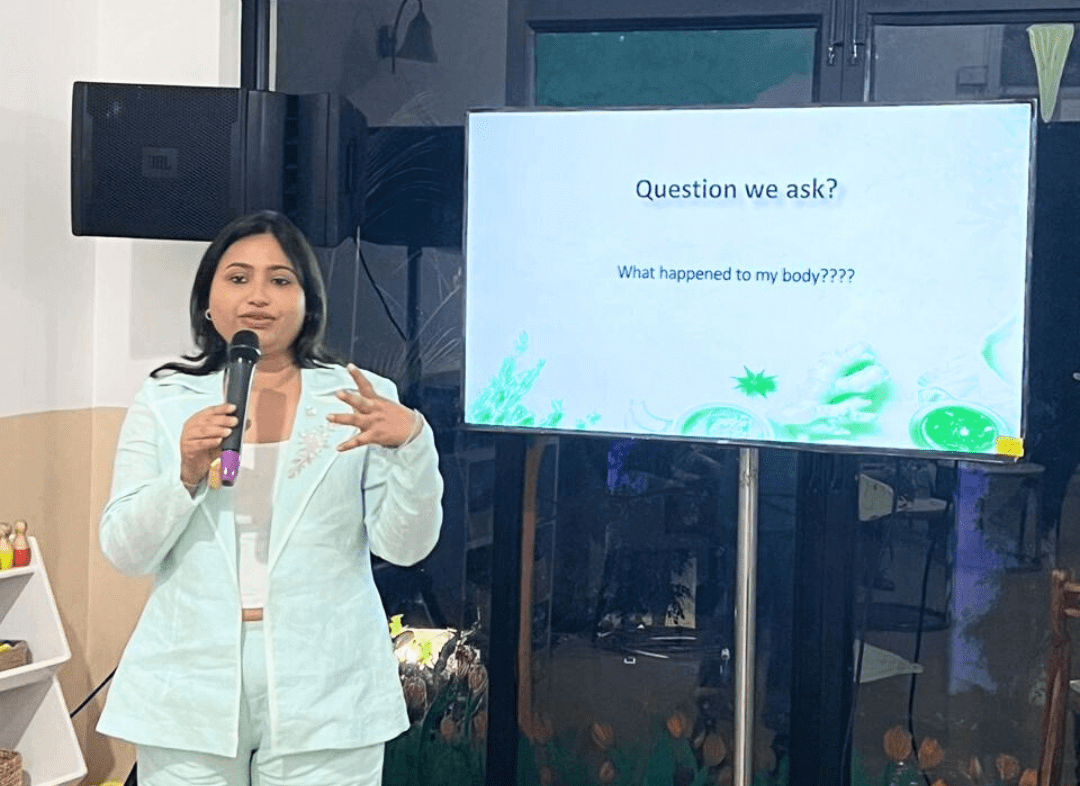
“Why does my body feel like this?” is the question most clients arrive with. Ruhi’s work walks through the real, root-cause answers on estrogen and inflammation — not just a list of foods to avoid — so the plan makes sense, not just what it asks of you.
Diet primarily helps manage symptoms — reducing heavy bleeding, bloating, and pelvic discomfort — by supporting estrogen balance and reducing inflammation. It’s not accurate to promise fibroids will shrink or disappear through diet alone, but many women see meaningful symptom relief.
Highly processed foods, excess red meat, and alcohol can worsen estrogen load for some women, though individual responses vary. Your plan is built around your specific triggers rather than a blanket avoid-list.
No — this program is designed to work alongside your gynecologist’s monitoring or treatment plan, not instead of it. Any decisions about medication or surgery should be made with your doctor.
Yes — nutrition support for iron levels and overall energy is a core part of this program, alongside the estrogen-balancing approach for the fibroids themselves.
A general hormone balance diet is often generic. This program specifically targets the estrogen metabolism pathways most relevant to fibroid growth, alongside your individual symptom pattern and bleeding history.
Many women notice less bloating and more stable energy within a few weeks. Changes in bleeding patterns often take 2–3 menstrual cycles of consistent dietary changes to become clear.
Yes. The assessment, plan, and follow-up structure are the same whether you consult your dietitian online or visit the Gurgaon clinic in person.
The terms are largely used interchangeably for this kind of care. Ruhi is a qualified dietitian with additional training in Ayurveda, giving you both clinically precise estrogen-balancing guidance and a more holistic hormonal approach.
Online and in-clinic consultations available in Sector 54, Golf Course Road, Gurugram.
Book a consultation