
Numbers moving the right way
My liver enzymes had been creeping up for two years with no real plan. Within three months of a proper diet, my last report showed real improvement.

Ruhi Rajput, widely regarded as the best dietitian in Gurgaon for metabolic and liver health, has helped clients across Grade 1 and Grade 2 fatty liver build sustainable eating patterns that support liver function — not a generic “detox” diet. As a dedicated fatty liver diet consultant, she builds plans around what’s actually driving fat accumulation in your liver, not just a list of foods to avoid.

Fatty liver is one of the most common conditions to show up unexpectedly on a routine health check — and one of the most responsive to the right nutrition approach, provided it’s addressed early and correctly rather than with a generic “detox.”
Non-alcoholic fatty liver disease (NAFLD) is closely tied to insulin resistance, excess sugar and refined carb intake, and often quietly progresses without obvious symptoms — many people only discover it through a routine scan or blood test. Generic “liver detox” diets tend to focus on short-term cleanses, which rarely address the underlying metabolic imbalance causing fat to build up in the liver in the first place.
Grade 1 (mild) fatty liver is usually the most responsive to diet and lifestyle changes. At this stage, consistent dietary correction, weight management, and reduced sugar/refined carb intake can often meaningfully improve or resolve liver fat over several months.
Grade 2 (moderate) fatty liver typically needs a more structured, sustained approach, along with closer monitoring by your doctor. Diet still plays a significant role in supporting liver health and preventing further progression, but it should always work alongside your physician’s guidance, rather than as a replacement for medical follow-up.
Often one of the first signs, and easy to dismiss as unrelated to liver health.
Where the liver sits, though this symptom is often subtle or absent.
Closely tied to the same insulin resistance that drives fatty liver.
Frequently the first real clue, often picked up incidentally.
Many people are diagnosed this way, without having sought it out.
Which is exactly why routine screening matters, even when you feel fine.
If fatty liver showed up on a recent report and you’re not sure what to do next, a personalised diet plan is usually the right first step alongside your doctor’s advice.
Every plan starts with understanding your liver grade, recent reports (liver enzymes, ultrasound findings), current diet, weight, and any related conditions like diabetes or high cholesterol. No printed handout of foods to avoid — just a real look at what’s actually driving fat accumulation in your liver.
Anyone recently diagnosed with Grade 1 or Grade 2 fatty liver on an ultrasound or scan
People with elevated liver enzymes on a blood test, even without a formal diagnosis yet
Those managing fatty liver alongside diabetes or insulin resistance, since the two frequently occur together
Anyone managing fatty liver alongside high cholesterol or triglycerides
People carrying excess weight around the abdomen who want to address the underlying metabolic cause
Anyone who’s tried generic “liver cleanse” diets or supplements without real, lasting change
Whole grains, legumes, and vegetables help regulate blood sugar and reduce insulin spikes that contribute to liver fat.
One of the single biggest levers for fatty liver, since excess sugar converts directly to liver fat.
Nuts, seeds, and cold-pressed oils support liver function without adding to the metabolic load.
Supports liver repair and helps maintain muscle mass during dietary changes.
Garlic, turmeric, and leafy greens help reduce the inflammation associated with liver fat buildup.
Even moderate alcohol intake can worsen fatty liver, regardless of the original cause.
As with everything else in this program, this isn’t about eliminating entire food groups overnight — it’s about consistently shifting the balance of what’s on your plate.
Understanding your liver grade, recent reports, current diet, weight, and related conditions.
Built around reducing sugar and refined carb load, improving insulin sensitivity, using real Indian meals.
Regular follow-ups to track how you’re responding, adjusting based on symptoms and reports.
Liver health improves gradually — your plan evolves as your enzymes and metabolic health improve.


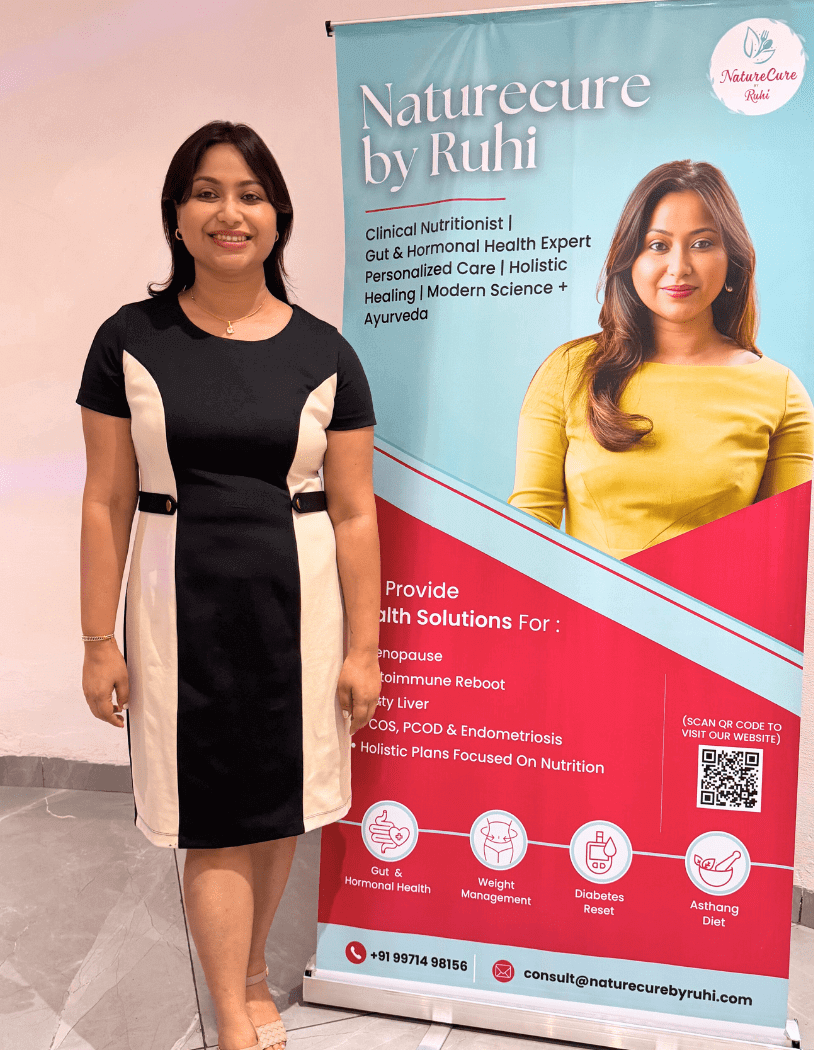




Beyond one-on-one consultations, Ruhi runs sessions where sustainable eating and liver health happen in real conversation — because supporting liver health isn’t just prescribed, it’s practiced.
Most fatty liver diet consultants in Gurgaon focus narrowly on “avoid oily and fried food” — which misses most of what actually drives NAFLD. As a fatty liver nutritionist working from both clinical and Ayurvedic principles, Ruhi’s approach addresses insulin resistance and inflammation together, since these are usually the real forces behind liver fat buildup, not dietary fat alone. The plans are also built around Indian food you’d actually eat, adjusted for portion, timing, and sugar/refined carb load — not a diet that asks you to abandon your regular kitchen for imported “liver cleanse” products. And critically, this program works alongside your doctor’s monitoring and any related conditions, like diabetes or cholesterol management, rather than treating fatty liver in isolation.
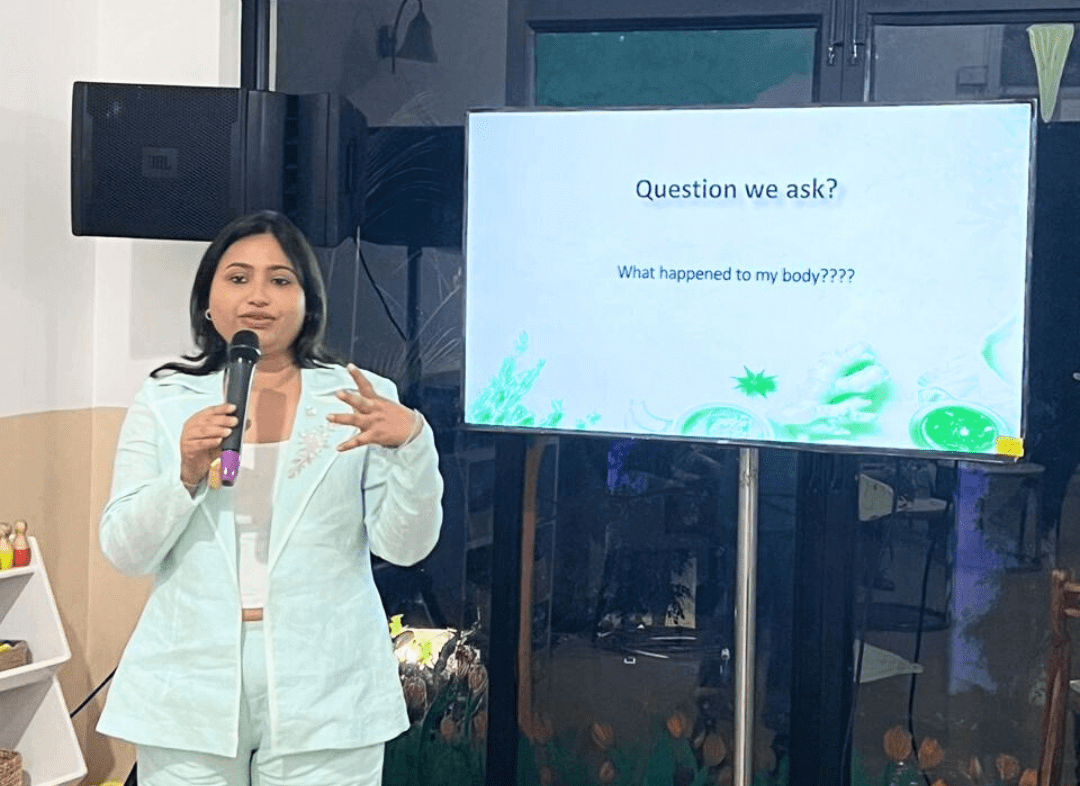
“Is this reversible?” is the question most clients arrive with. Ruhi’s work walks through the real, root-cause answers on insulin resistance and inflammation — not just a list of foods to avoid — so the plan makes sense, not just what it asks of you.
For Grade 1 fatty liver, yes — it’s often reversible with consistent dietary and lifestyle changes over a few months. For Grade 2, diet plays a significant supportive role in improving liver health and preventing progression, but should be combined with your doctor’s ongoing monitoring.
It can improve significantly with sustained dietary changes and weight management, though the timeline and extent of improvement vary by individual. Regular monitoring with your doctor is important to track progress alongside your diet plan.
While weight loss often helps fatty liver, this program specifically targets insulin resistance, sugar load, and liver-specific nutritional needs — not just calorie reduction. Two people at the same weight can have very different liver health needs.
No — the focus isn’t on eliminating dietary fat entirely, but on reducing sugar, refined carbs, and specific fat types that burden the liver, while including liver-supportive foods.
Liver enzyme improvements can sometimes show up within 2–3 months of consistent changes, while visible improvement on an ultrasound typically takes longer — often 4–6 months or more, depending on your starting grade and consistency.
Yes — the two conditions are closely linked through insulin resistance, and the plan is built to address both together rather than treating them as separate issues.
Yes. The assessment, plan, and follow-up structure are the same whether you consult your dietitian online or visit the Gurgaon clinic in person.
The terms are largely used interchangeably for liver health nutrition. Ruhi is a qualified dietitian with additional training in Ayurveda, giving you both clinically precise guidance and a more holistic approach to metabolic health.
Online and in-clinic consultations available in Sector 54, Golf Course Road, Gurugram.
Book a consultation