
HbA1c finally trending down
My blood sugar numbers had been stuck for years despite “trying everything.” A plan built around my actual meals made the real difference.

Ruhi Rajput, widely regarded as the best dietitian in Gurgaon for blood sugar management, has helped clients across Type 2 diabetes, prediabetes, and insulin resistance build realistic, sustainable eating patterns. As a dedicated diabetic diet consultant, she builds plans around real Indian meals and your actual lifestyle — not a generic printed diet chart.

Diabetes management often feels like a lifetime sentence of restriction — but the right nutrition approach is less about what you can never eat again, and more about understanding how your specific body responds to food.
Most diabetes diet advice starts and ends with “avoid sugar and carbs” — which misses most of what actually matters. Insulin resistance, meal timing, carb quality (not just quantity), and even sleep and stress all directly affect blood sugar control. Two people eating the exact same meal can have very different blood sugar responses depending on when they eat it, what it’s paired with, and how insulin-sensitive their body currently is.
That’s why Ruhi Rajput’s diabetes diet plans in Gurgaon focus on the full picture — not just what to remove from your plate, but how to structure meals so your blood sugar stays steadier throughout the day.
Especially carb-heavy ones — often a sign of blood sugar spiking and then crashing.
Even shortly after eating — a common sign of insulin resistance.
Particularly around the abdomen, despite consistent effort.
A more advanced sign worth flagging to your doctor if not already diagnosed.
Signs that typically prompt a diagnosis if not already known.
A strong risk factor worth acting on proactively, even before symptoms appear.
If several of these sound familiar, especially alongside a family history, a blood sugar–focused nutrition plan is worth exploring even before a formal diagnosis.
Every plan starts with understanding your diagnosis (Type 1, Type 2, or prediabetes), current medication or insulin regimen, recent blood sugar reports, and your everyday eating patterns. No restrictive, one-size-fits-all chart — just a real look at how your blood sugar actually responds to food.
Type 2 diabetics looking to manage or improve blood sugar control through sustainable dietary changes
Prediabetics and people with insulin resistance who want to prevent progression to full diabetes
Type 1 diabetics who want nutrition support alongside insulin therapy — carb counting, meal timing, reducing swings
People with PCOS-related insulin resistance, where blood sugar management is often the missing piece
Anyone managing diabetes alongside weight concerns, since the two are frequently connected
Vegetables, legumes, and whole grains slow glucose absorption and help prevent sharp blood sugar spikes.
Helps blunt the glucose response when paired with carbohydrates, rather than eating carbs alone.
Nuts, seeds, and cold-pressed oils support insulin sensitivity over time.
Rice and roti don’t need to be eliminated, but how and when they’re eaten changes their impact.
The single biggest lever for most people managing blood sugar.
Irregular eating patterns can worsen insulin resistance over time, even with healthy food choices.
None of this requires giving up your regular Indian meals — it’s about restructuring how, when, and with what you eat them.
Understanding your diagnosis, current medication or insulin regimen, and recent blood sugar reports.
Built around your specific blood sugar patterns and insulin sensitivity, using real Indian meals.
Regular follow-ups to track how your blood sugar, energy, and weight are responding.
Your plan evolves as your blood sugar control improves, medication changes, or new factors come up.






Beyond one-on-one consultations, Ruhi runs sessions where sustainable eating and blood sugar management happen in real conversation — because managing diabetes well isn’t just prescribed, it’s practiced.
Most diabetic diet consultants in Gurgaon hand out a standard printed meal chart. As a diabetes dietitian working from both clinical and Ayurvedic principles, Ruhi’s approach looks deeper — combining insulin-sensitivity-focused nutrition science with Ayurvedic understanding of digestion, which often explains why identical “diabetic diets” work differently for different people. The plans are also built around Indian food you’d actually eat — dal, roti, sabzi, rice — with the right combinations, portions, and timing. Importantly, this program works alongside your doctor’s treatment and monitoring — never in place of it.
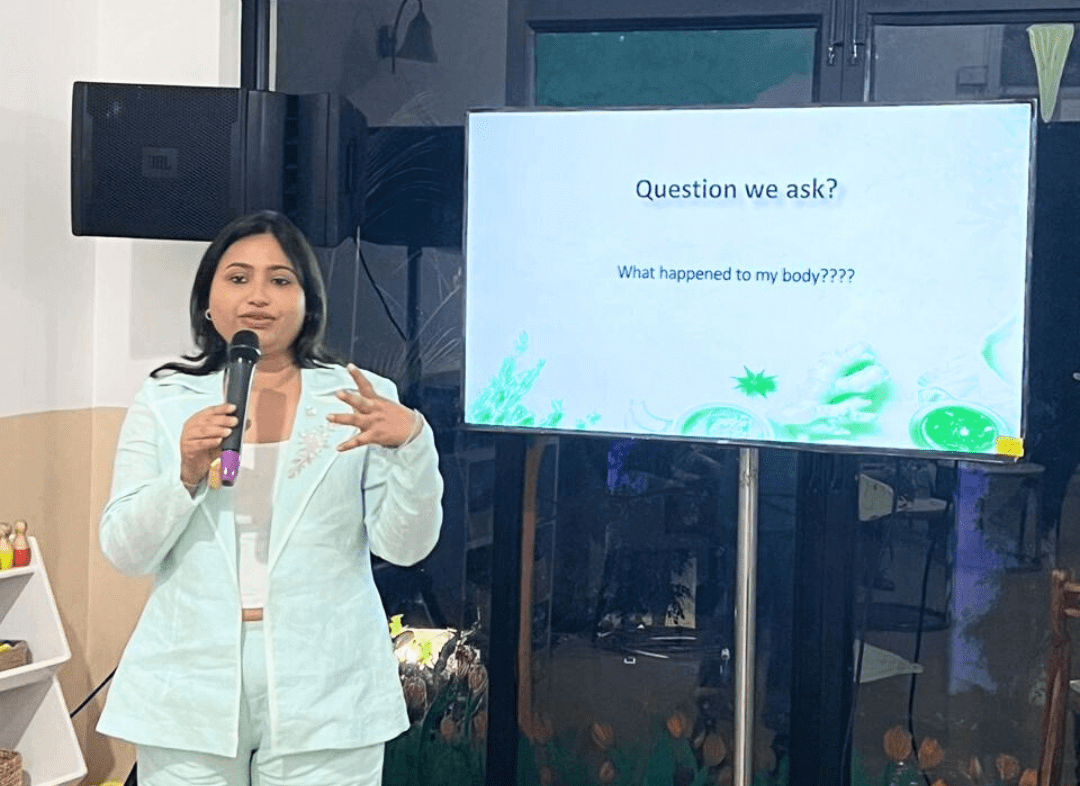
“Why does my blood sugar spike even when I’m eating right?” is the question most clients arrive with. Ruhi’s work walks through the real, root-cause answers on timing and insulin response — not just a list of foods to avoid — so the plan makes sense, not just what it asks of you.
For many people, yes — significant improvement or even remission is possible with sustained dietary and lifestyle changes, especially when caught early or when insulin resistance is the primary driver. It varies by individual, and any medication changes should be guided by your doctor.
Yes — but the goal here is different from Type 2. For Type 1 diabetes, nutrition support focuses on carb counting, meal timing, and reducing blood sugar swings alongside your insulin therapy, not on reducing or removing medication.
Prediabetes and insulin resistance are often the stage where diet has the most preventive power — the goal is stopping progression to full diabetes. For diagnosed diabetes, the focus shifts to long-term blood sugar control.
No — never stop or change medication without your doctor’s guidance. This program is designed to work alongside your existing treatment, and any medication adjustments should happen through your physician.
Insulin resistance means your body isn’t responding to insulin efficiently, causing blood sugar to run higher than ideal — it often precedes prediabetes and Type 2 diabetes. Catching and addressing it early through diet can prevent progression altogether.
Many people notice more stable energy and fewer sugar crashes within 2–3 weeks. Meaningful changes in blood sugar markers (like HbA1c) typically show up over 2–3 months of consistent dietary changes.
Yes. The assessment, plan, and follow-up structure are the same whether you consult your nutritionist online or visit the Gurgaon clinic in person.
The terms are largely used interchangeably for diabetes care. Ruhi is a qualified dietitian with additional training in Ayurveda, giving you both clinically precise blood-sugar guidance and a more holistic approach to digestion and metabolism.
Online and in-clinic consultations available in Sector 54, Golf Course Road, Gurugram.
Book a consultation